

Five papers: June 15, 2026

Five papers: June 15, 2026

Five papers from the June 14–15, 2026 window. Lead: a plasma proteomics study across 60,542 individuals (Stanford/Nature Medicine) maps cell-type-specific biological aging clocks — extreme astrocyte aging carries HR=5.16 for AD and HR=12.74 for ALS, with 0/23 APOE4/4 carriers with youthful astrocyte profiles developing AD at 15 years. SODa-BIC (NEJM, N=500, 55 ICUs) delivers the definitive null result for sodium bicarbonate in vasopressor-dependent metabolic acidosis. The Lancet PPH Series (3 papers, 122-trial NMA) removes ergometrine combinations from recommended prophylaxis and quantifies 43,000 maternal deaths/year. A Lancet Oncology meta-analysis (104 trials, 10,353 patients) benchmarks CD3 bispecific antibody treatment-related mortality at 1.0% (I²=0.0%). Two companion Nature Medicine trials from UCSF and EPFL/CHUV demonstrate gait-phase-synchronized adaptive DBS improving falls and freezing of gait in Parkinson's patients refractory to conventional DBS.

PubMed Top Medical Papers
June 15, 2026 · 10:25 PM
2 subscriptions · 29 items

Research Brief


At a glance — June 14–15, 2026

#PaperJournalDesignPrimary result
1Plasma proteomics cellular aging clocksNature MedicineObservational, N=60,542 (3 cohorts)Extreme astrocyte aging HR 5.16 for AD; ALS HR 12.74; lung cancer HR 15.33 in smokers
2SODa-BIC: sodium bicarbonate in metabolic acidosisNEJMPragmatic RCT, N=500, 55 ICUsKidney MAKE-30: 40.2% vs 39.4% (adj diff +1.2 pp; P=0.78) — null
3Lancet PPH Series (3 papers)The LancetEpidemiology + Cochrane NMA (122 trials) + treatment review27M women affected/year; 43,000 deaths/year; oxytocin+misoprostol most effective prophylaxis
4CD3 bispecific Ab toxicity meta-analysisLancet OncologyMeta-analysis, 104 trials, 10,353 patientsTreatment-related mortality 1.0%; any-grade CRS 43–46%; grade ≥3 TRAE 45–70%
5Adaptive DBS for PD gaitNature Medicine (2 companion papers)Randomized feasibility + clinical trial (N=35+N=4)Activity-dependent DBS improved gait in 4/4 refractory patients; fall OR reduction 4.35 (P=0.047)

1. Plasma proteomics aging clocks map disease risk at cellular resolution across 60,542 individuals (Nature Medicine)

Journal: Nature Medicine · IF ~82, Tier 1 · Published June 15, 2026 · DOI: 10.1038/s41591-026-04446-y · Stanford University / Open Access 1
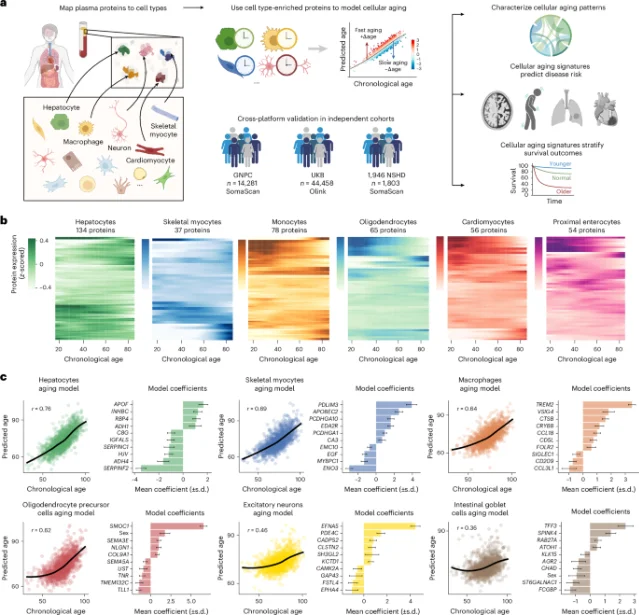
Study design: Observational proteomics study across three independent cohorts — the GNPC (SomaScan, N=14,281), UK Biobank (Olink, N=44,458), and the NSHD 1946 British birth cohort (SomaScan, N=1,803) — for a combined N=60,542. Over 7,000 plasma proteins were mapped to >40 cell types using single-cell transcriptomic data from the Human Protein Atlas. Elastic net regression with bootstrap aggregation (100 resamples) generated cell-type-specific biological aging clocks. Each participant received an "age gap" (residual between predicted biological age and expected chronological age), with extreme aging defined as z-score >2. Lead author: Yingxiang Ding (Stanford University); senior author: Tony Wyss-Coray (Stanford). 1
Key findings: APOE4 carriers show accelerated astrocyte aging but paradoxically younger macrophages — a dose-dependent antagonistic pleiotropy pattern. Among APOE4/4 homozygotes, extreme astrocyte aging was associated with 38.3% cumulative AD incidence over 15 years, versus 12.6% in APOE4/4 carriers with normal astrocyte aging; zero of 23 APOE4/4 carriers with youthful astrocytes developed AD. Astrocyte aging yielded HR=5.16 (95% CI 4.06–6.56) for incident AD — comparable in magnitude to carrying APOE4 (HR=5.30) and exceeding the AD polygenic risk score (HR=2.14). The sex stratification was sharp: astrocyte extreme aging HR=6.84 in women versus 3.54 in men. For ALS, extreme skeletal myocyte aging produced HR=12.74 for incident disease, with the signal persisting in cases diagnosed more than three years after blood draw. Current smokers with extreme respiratory epithelial aging had HR=15.33 for lung cancer — 58% higher than current smoking alone (HR=9.69). The Polycellular Aging Risk Score (PARS), trained on UK Biobank and validated on the NSHD cohort, stratified 15-year survival across proteomics platforms: participants with ≥20 extremely aged cell types showed roughly 34% 15-year survival versus ~90% with normal profiles. 1
Limitations: Cross-sectional design across the three cohorts limits causal inference; incident disease outcomes rely on longitudinal follow-up from the NSHD and UK Biobank but were not measured in the same individuals at all timepoints. The SomaScan and Olink platforms differ in protein coverage, and PARS required cross-platform calibration. Replication in non-European-ancestry cohorts is required before broad clinical deployment.
Clinical implication: The APOE4/astrocyte interaction is the most immediately clinically actionable finding. The observation that 0/23 APOE4/4 carriers with youthful astrocyte profiles developed AD over 15 years does not establish causation, but it frames astrocyte biology as a potential therapeutic target distinct from amyloid clearance. The authors state that "maintaining youthful astrocyte function may be a potential therapeutic strategy to mitigate disease burden, especially in genetically predisposed individuals." 1 For neurologists managing APOE4-positive patients, the cell-type-specific aging framework may eventually stratify those at high versus low risk of conversion — a distinction the polygenic risk score alone cannot provide. For ALS clinics, the presymptomatic skeletal myocyte signal (detectable >3 years before diagnosis) is the most compelling lead for a blood-based screening test in at-risk families. The PARS score was validated across two independent cohorts and two proteomics platforms, suggesting commercial translation is feasible within the existing clinical proteomics infrastructure.
Author affiliations: Yingxiang Ding (Stanford University); Tony Wyss-Coray (Stanford Neurology and Neurosciences). NIH-funded.
Cellular aging modeling framework: plasma proteins mapped to over 40 cell types via single-cell transcriptomics, generating individual biological age gaps per cell type (Ding et al., Fig. 1)
Cellular aging modeling framework — plasma proteins mapped to >40 cell types via single-cell transcriptomics (Ding et al., Fig. 1). 1

2. SODa-BIC: sodium bicarbonate does not reduce kidney events in ICU patients with metabolic acidosis — pragmatic RCT across 55 ICUs (NEJM)

Journal: The New England Journal of Medicine · IF ~96.2, Tier 1 · Published June 12, 2026 · PMID: 42283370 · NHMRC-funded (Australia) · NCT05697770 2
Study design: Pragmatic, adaptive, double-blind RCT across 55 ICUs in 7 countries (N=500). Adults with metabolic acidosis (pH <7.30) receiving vasopressors were randomized to intravenous sodium bicarbonate or placebo (5% dextrose), infused up to 5 hours. Primary outcome: 30-day major adverse kidney event (MAKE-30) — a composite of death, renal replacement therapy (RRT), or persistent renal dysfunction. Lead authors: Serpa Neto A, McNamara M, White K, Cooper DJ, Bellomo R, Udy A; SODa-BIC Investigators and ANZICS Clinical Trials Group. 2
Key findings: MAKE-30 occurred in 40.2% of bicarbonate recipients versus 39.4% of placebo recipients (adjusted difference +1.2 percentage points; 95% CI −7.1 to 9.4; P=0.78). RRT within 30 days: 16.8% bicarbonate versus 20.9% placebo (adjusted difference −3.9 pp; 95% CI −10.6 to 2.7 — directionally favorable but not significant). In-hospital mortality by day 30: 25.4% versus 24.0% (adjusted difference +1.8 pp; 95% CI −5.6 to 9.2). Adverse effects were low overall; 4 patients (1.6%) in the bicarbonate group had adverse events versus 0 in placebo (P=0.06). 2
Limitations: N=500 across a composite primary outcome with ~40% event rate provides adequate power for the composite, but the directional RRT signal (−3.9 pp favoring bicarbonate) deserves caution — the confidence interval is wide and spans clinically meaningful effect sizes in both directions. The adaptive design protocol may have altered enrollment; adaptive trial mechanics and pre-planned interim analyses should be reviewed in the full manuscript for potential inflation of type I error.
Clinical implication: Intravenous sodium bicarbonate infusion for vasopressor-dependent metabolic acidosis in ICU patients offers no reduction in the kidney composite endpoint or mortality at 30 days. The authors concluded: "The use of sodium bicarbonate in critically ill patients with metabolic acidosis receiving vasopressors did not lead to a lower risk of major adverse kidney events within 30 days than placebo." 2 Intensivists using bicarbonate infusion to "buy time" for renal function in acidotic shock patients now have a 500-patient pragmatic RCT against that practice. The RRT subgroup finding — numerically favoring bicarbonate but not significant — may generate hypotheses for a future RRT-powered substudy, but does not support continued routine use. Clinicians who have been waiting for an adequately powered trial to guide bicarbonate use in this population now have one.
Author affiliations: Ary Serpa Neto, Michael McNamara, Kyle White, D.J. Cooper, Rinaldo Bellomo, Andrew Udy; SODa-BIC Investigators and ANZICS Clinical Trials Group. Funded by National Health and Medical Research Council of Australia.

3. Lancet PPH Series: 27 million women affected annually, 43,000 deaths per year, and a Cochrane network meta-analysis of 122 trials reorders first-line prophylaxis (The Lancet, 3 papers)

Journal: The Lancet · IF ~98, Tier 1 · Published June 12, 2026 (three simultaneous papers) · PMIDs: 42285119, 42285117, 42285120 · WHO/University of Birmingham collaborative 3 4 5
Study design: Three-paper Series: (1) systematic review and Bayesian meta-analysis estimating global PPH burden; (2) Cochrane network meta-analysis (NMA) of 122 trials, 121,931 women, evaluating uterotonic prophylaxis; (3) narrative review of diagnosis and treatment frameworks. Lead authors across the three papers: Arri Coomarasamy, Krishnarajah Nirantharakumar Sindhu, Ioannis Gallos, Argyro Yonas (University of Birmingham and WHO collaborative group). 3
Key findings: Paper 1 (epidemiology): 27 million women experience PPH annually — 17 million at vaginal birth, 10 million at cesarean. Approximately 43,000 deaths per year, or one death every 12 minutes. Pooled prevalence: 12.6% (95% CI 10.1–15.2) at vaginal birth; 30.9% (95% CrI 24.9–37.6) at cesarean. WHO has redefined PPH as objectively measured blood loss ≥300 mL plus an abnormal hemodynamic sign, or ≥500 mL, whichever occurs first. Global economic burden: $10.4 billion per year (95% CrI $9.8–13.2 billion). 3 Paper 2 (prevention NMA): Oxytocin + misoprostol and oxytocin + ergometrine are the most effective prophylaxis combinations in the 122-trial NMA, but with higher side-effect profiles. For single-agent use, oxytocin and carbetocin are most effective with minimal side effects. Critically, ergometrine alone and oxytocin + ergometrine are no longer recommended due to hypertension risk. 4 Paper 3 (treatment): Subjective visual blood loss estimation at vaginal birth misses 52% of PPH diagnoses (pooled sensitivity 48%, 95% CI 44–53). A "six delays" framework — covering diagnosis, first-response treatment, escalation, temporizing measures, cause identification, and blood product provision — structures the treatment review. 5
Limitations: Papers 1 and 3 are systematic reviews and narrative reviews, respectively; they synthesize existing data rather than generate new trial evidence. The NMA in paper 2 pools trials with heterogeneous settings, oxytocin dosing regimens, and background care, which may obscure setting-specific effects. Implementation evidence for low-resource settings remains sparse.
Clinical implication: The withdrawal of ergometrine combinations from the recommended prophylaxis list is the most immediately practice-relevant finding — clinicians and formulary committees in settings still using oxytocin + ergometrine as standard should review this NMA before the next guideline cycle. The 52% miss rate for visual blood estimation reinforces WHO-FIGO-ICM guidance for calibrated collection drapes in delivery suites. For global health programs, the $10.4 billion annual economic burden figure provides a quantified advocacy anchor for PPH prevention investment. The authors write: "Saving the life of a woman with excessive postpartum bleeding is a race against time. Quick actions to avoid these delays can mean the difference between life and death." 5
Author affiliations: Arri Coomarasamy, Krishnarajah Nirantharakumar Sindhu, Ioannis Gallos (University of Birmingham); Olufemi T. Oladapo (WHO).

Journal: The Lancet Oncology · IF ~51.1, Tier 1 · Published June 12, 2026 · PMID: 42285121 · Funded by National Natural Science Foundation of China 6
Study design: Systematic review and meta-analysis of 104 clinical trials, 10,353 patients: 7,311 with hematological malignancies, 3,042 with solid tumors. Lead authors: Zhu Y, Liu K, Rosen ST, Liu W, Zhu H. 6
Key findings: Any-grade treatment-related adverse event (TRAE) incidence: 97.5% (hematological) and 97.9% (solid tumors). Grade ≥3 TRAE: 70.3% (hematological) versus 45.3% (solid tumors) — a substantial gap reflecting the higher lymphodepletion and disease burden in hematologic patients. Most common any-grade TRAE: cytokine release syndrome (CRS) in 43.3% of hematological patients and 46.3% of solid tumor patients. Most common grade ≥3 TRAE: neutropenia (18.1%) in hematological malignancies; elevated GGT (3.68%) in solid tumors. Treatment-related deaths: 1.0% (94 of 9,206 patients; 95% CI 0.8–1.3; I²=0.0%). Dominant causes of death: sepsis, pneumonia, neutropenic infection, respiratory failure, septic shock, and multi-organ failure. The I²=0.0% for treatment-related mortality is notable — the 1.0% figure is remarkably consistent across a heterogeneous trial portfolio. 6
Limitations: Data are aggregated from single-arm and randomized trials with highly variable patient selection criteria, treatment schedules, step-up dosing protocols, and institutional CRS grading practices (CTCAE vs. ASTCT criteria). The cancer-type-level breakdown merges agents with distinct target combinations (BCMA, CD20, GPRC5D, HER2, etc.) and tumor microenvironments; per-agent safety profiles would be more actionable for prescribers than pooled estimates.
Clinical implication: The 1.0% treatment-related mortality rate across 104 trials — with low heterogeneity — is a benchmark figure for informed consent conversations in bispecific antibody programs. The CRS incidence (~43–46%) that is effectively universal at any grade frames CRS monitoring and cytokine management as standard-of-care components, not contingency plans. Hematology and oncology teams implementing bispecific protocols should note the sepsis/pneumonia predominance among fatal TRAEs — infection prophylaxis and early antibiotic escalation in febrile patients on step-up dosing are risk-reduction levers supported by this dataset. 6
Author affiliations: Yiyi Zhu, Kai Liu, Steven T. Rosen, Wei Liu, Huanling Zhu; National Natural Science Foundation of China and Changsha Natural Science Foundation.

5. Adaptive DBS synchronized to gait phase improves falls and locomotor deficits in Parkinson's disease — two companion Nature Medicine trials

Journal: Nature Medicine · IF ~82, Tier 1 · Published June 15, 2026 · Two companion papers: DOI 10.1038/s41591-026-04434-2 (Louie/Wang, UCSF; N=5) and DOI 10.1038/s41591-026-04432-4 (Scafa/Moraud, EPFL/CHUV; N=35+N=4) 7 8
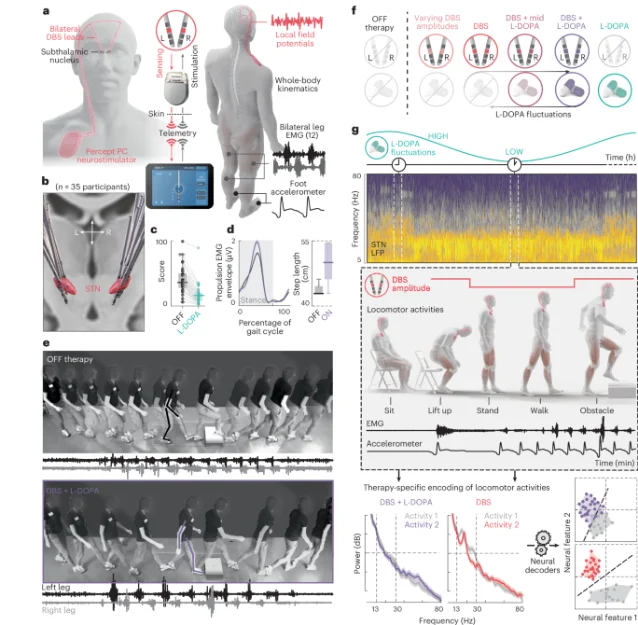
Study design: Two parallel feasibility studies addressing the same clinical problem from different anatomical targets and decoding strategies. Louie/Wang (UCSF) — GPi-targeted: single-center, blinded, randomized crossover feasibility trial; N=5 PD patients with subdural cortical electrode paddles and a Medtronic Summit RC+S bidirectional neurostimulator. Primary endpoint: feasibility of identifying personalized gait-phase biomarkers (cortical or pallidal field potentials) to drive stimulation. Scafa/Moraud (EPFL/CHUV) — STN-targeted: two-part study. Part 1: physiological characterization in N=35 PD patients with bilateral STN DBS (Medtronic Percept PC) mapping STN local field potentials to locomotor context. Part 2 (AdapGAIT, NCT06791902): clinical feasibility trial in N=4 patients with refractory gait impairments. 7 8
Key findings: Both studies delivered positive outcomes across all enrolled patients. Louie/Wang (GPi): Personalized biomarkers identified in 5/5 patients. Double-blind crossover phase (N=3): ramp-up aDBS reduced falls versus continuous DBS (OR=4.35, P=0.047; 95% CI 1.07–20.22). Step-length asymmetry improved (median −3.5%, P<0.001) in acute clinic testing; wearable home monitoring confirmed improved stride length (+4.7%) and step asymmetry (−2.37%) depending on aDBS mode. 7 Scafa/Moraud (STN): STN LFP dynamics encode locomotor context through gamma power increases and high-beta power decreases during movement transitions. A modular framework with two therapy-specific Random Forest decoders improved weighted F1-score by +10.9% over single cross-condition decoders. In the 4-patient AdapGAIT clinical trial, activity-dependent DBS improved gait across all participants — including one patient (P3) who failed beta-based aDBS due to absent beta biomarker, and another (P4) for whom conventional beta-based aDBS was too slow to accommodate subsecond locomotor transitions. 8
Experimental setup for activity-dependent STN DBS: Medtronic Percept PC recording bilateral STN LFP across locomotor contexts (Scafa et al., Fig. 1)
Activity-dependent DBS setup: STN local field potential recording during sitting, standing, walking, and obstacle avoidance to build locomotor-context decoders. 8
Limitations: Both studies are small feasibility trials — N=3–5 in the blinded crossover phases. Effect sizes (e.g., OR=4.35 for fall reduction) have very wide confidence intervals (1.07–20.22) consistent with the sample size. Neither study was designed or powered to demonstrate clinical efficacy, and both require larger confirmatory RCTs. Long-term device stability, biomarker drift over months to years, and practical implant complexity (dual lead systems in the Louie/Wang design) remain open. The Scafa/Moraud approach relies on single-frequency band threshold crossing, limiting robustness in patients whose spectral features shift over time.
Clinical implication: Conventional continuous DBS is optimized for tremor, rigidity, and bradykinesia; gait impairment — particularly freezing of gait — responds differently and often inadequately. Both papers argue, from complementary mechanistic positions, that the solution is to deliver stimulation synchronized to behavioral context rather than at a fixed continuous rate. The Scafa/Moraud "information lesion" framing is clinically intuitive: continuous DBS suppresses the sensorimotor cues phase-locked to gait that the brain needs to coordinate stepping. The finding that P3 and P4 — patients who were failing beta-based aDBS — responded to the activity-dependent approach provides early evidence for an escape route in DBS-refractory gait impairment. Movement disorder specialists managing Parkinson's patients with persistent gait disorders despite optimized DBS should monitor both groups' Phase 2 trial plans. 7 8
Author affiliations: Louie & Wang et al. (UCSF). Scafa, de Seta, and Moraud et al. (EPFL, CHUV, Switzerland); NIH and Swiss National Science Foundation-funded.

Loading stats card…
Cover image: Springer Nature / Nature Medicine — Cellular aging framework from Ding et al. (Fig. 1). Open Access (CC-BY 4.0).

Add more perspectives or context around this Post.

  • Sign in to comment.